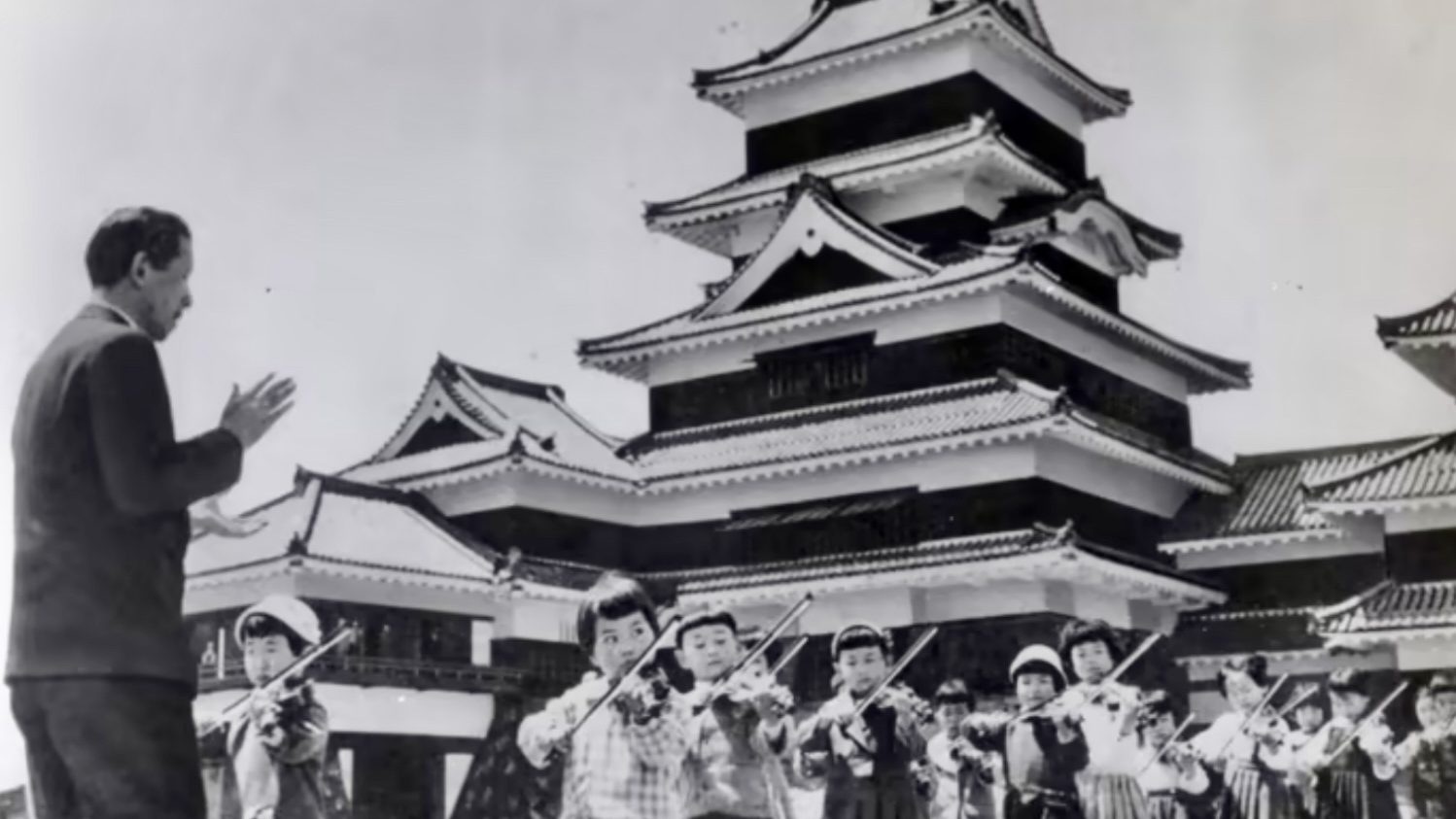
What is Suzuki?
The Suzuki approach is built on the idea that anyone can learn to play an instrument, given the right environment. Just as children learn to speak their native language through listening, imitation, and repetition, the Suzuki approach nurtures musical ability in a similar, natural way. Dr. Shinichi Suzuki, who called this philosophy “Talent Education,” believed that music has the power to inspire the heart and soul, helping to shape not just skilled musicians, but well-rounded individuals who appreciate beauty in the world around them.
By focusing on positive reinforcement and a supportive learning environment, the Suzuki Method encourages a lifelong love for music, while also fostering personal growth, discipline, and a sense of connection within the community.
At the heart of the Suzuki Method lies the Suzuki Triangle, a dynamic partnership between the student, teacher, and parent. This unique relationship is essential for nurturing a child’s musical journey, transforming learning into a collaborative experience that extends beyond the classroom. In this triangle, the teacher shares their expertise and guides the student through the complexities of music. Meanwhile, parents provide vital encouragement and support, creating a positive environment for growth. Together, they form a nurturing ecosystem where students can truly flourish, cultivating not just musical skills but also confidence and a lifelong love for music.
Where did this all begin?
The Suzuki Method was created in the mid-20th century by Japanese violinist Dr. Shinichi Suzuki, who believed in unlocking every child’s potential through music. Although he grew up as the son of Japan’s largest violin manufacturer, Dr. Suzuki never formally learned to play music. His journey began after hearing a recording of Mischa Elman’s beautiful rendition of Schubert’s “Ave Maria,” which inspired him to teach himself the violin.
Dr. Suzuki eventually traveled to Berlin to study with renowned violinist and composer Karl Klinger, but it wasn’t until he returned to Japan that his revolutionary teaching approach began to take shape. A colleague asked him to teach their young son violin, and this sparked a realization for Dr. Suzuki. He reflected on how easily children in Germany picked up their native language, compared to the challenges he faced learning it as an adult.
This led him to the profound understanding that children naturally learn through imitation, repetition, and encouragement—principles that became the foundation of the Suzuki Method. His philosophy would go on to transform music education, focusing not only on technical skill but also on developing beautiful character through music.
Suzuki in the Americas
The journey of Suzuki’s Talent Education in the U.S. began in 1958, when a film showcasing the first National Graduation Concert in Japan was screened at Oberlin College. This pivotal moment sparked interest among educators, leading many from various countries to visit Japan to learn directly from Dr. Suzuki and experience his innovative approach firsthand.
In 1964, Suzuki’s tour group of ten talented Japanese children made their inaugural visit to the United States, captivating audiences with their performances. This marked the beginning of an annual tradition, as tour groups of young musicians continue to share their artistry across the globe, inspiring countless individuals and fostering a deep appreciation for music.
How can I make the most of the Suzuki Approach while my child is learning an instrument?
The Suzuki Method is a well-structured learning process primarily designed for children. Here are the key elements that make it so effective:
1. A Blend of Group and Private Lessons
Suzuki students benefit from both one-on-one and group instruction. Private lessons allow teachers to focus on individual strengths and areas of improvement, while group lessons offer a collaborative, motivating atmosphere. This combination exposes students to diverse learning environments, helping them build confidence and progress faster.
2. Listening is Key
Suzuki students develop their musical ear by listening to hundreds of hours of music. By immersing themselves in high-quality performances, they learn to play in tune and with musicality—often before they can read sheet music. This method strengthens their ability to learn by ear, leading to more intuitive playing.
3.The Power of Repetition
Repetition is essential in mastering any instrument. In the Suzuki Method, repeated practice builds muscle memory, allowing students to play pieces fluently from memory. This emphasis on repetition ensures that each skill is deeply ingrained, setting the foundation for more advanced techniques.
4. Parental Involvement
Parents play a central role in Suzuki education. They attend lessons, support practice sessions, and even learn alongside their child. Their involvement fosters a nurturing environment, deepens family bonds, and helps ensure consistent progress, contributing to the child’s emotional and musical development.
Suzuki Association of the Americas
 Eastern NC Suzuki Association